Jio IPO 2026: Dates, Price, Allotment, Listing Details and How to Apply
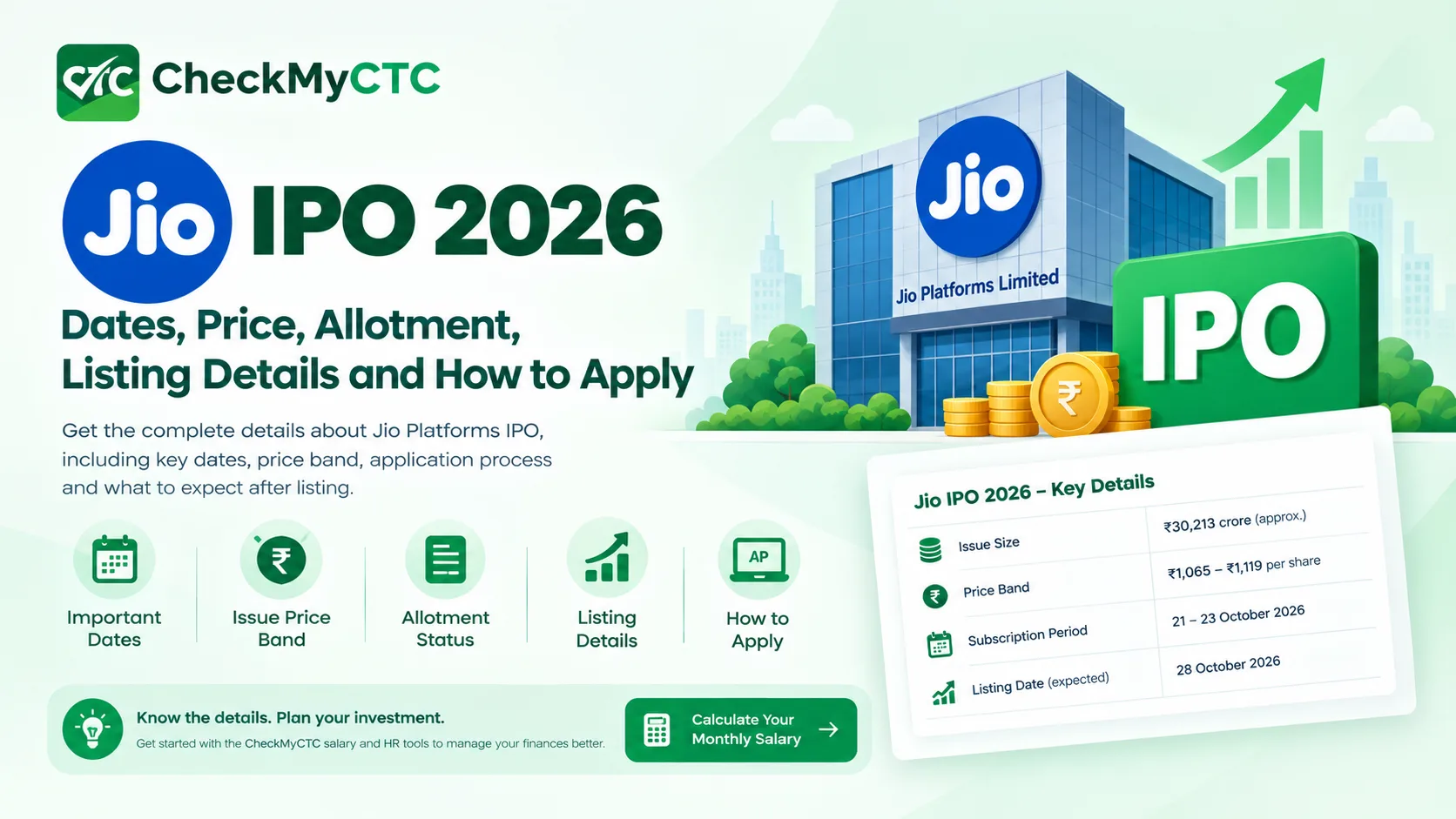
Jio IPO 2026: Price, Dates, Allotment, Listing Details and How to Apply
The Jio IPO is one of the major Indian stock market developments of 2026. Jio Platforms Limited, the digital services business associated with Reliance Industries Limited, has brought its planned public listing into focus for retail investors, existing Reliance shareholders and eligible employees.
For anyone researching the Reliance Jio IPO, the important questions include the issue price, subscription dates, eligibility, share allotment, expected listing date and the risks involved in investing. Understanding these details can help investors distinguish official information from market speculation.
As of 25 October 2026, the public subscription period has ended. The IPO opened on 21 October and closed on 23 October 2026. Investors should now check the official issue documents, allotment announcements and exchange updates for the latest confirmed information.
This guide explains the Jio Platforms IPO using information from the company's official IPO website, Reliance Industries' corporate announcements and the Securities and Exchange Board of India (SEBI). It also explains how IPO applications work and what investors should understand before making investment decisions.
What Is the Jio IPO?
An initial public offering, or IPO, is the process through which a company offers shares to public investors as part of its entry into the stock market.
The Jio IPO concerns Jio Platforms Limited, the company associated with Reliance Jio's telecommunications operations and a broader portfolio of digital businesses. It is important to distinguish Jio Platforms Limited from Reliance Industries Limited, which is its parent company.
Reliance Industries announced the proposed offering, and Jio Platforms subsequently filed its Red Herring Prospectus (RHP). The RHP provides detailed information about the offering, the company, its financial position, business risks and the terms investors should review.
The official company website provides the IPO documents and related materials:
- Jio Platforms IPO official website and issue documents
- SEBI filing for the Jio Platforms Red Herring Prospectus
- Reliance Industries corporate announcements
These sources should be used to verify official issue terms instead of relying solely on social media posts, unofficial websites or market rumours.
Jio IPO 2026: Key Details at a Glance
The following table summarises the principal offering details reported in the company's IPO materials and contemporaneous announcements. Investors should refer to the final official documents for any updated or more detailed terms.
| Particular | Details |
|---|---|
| Company | Jio Platforms Limited |
| Parent company | Reliance Industries Limited |
| IPO type | Initial public offering |
| Reported issue size | Approximately ₹30,213 crore |
| Reported price band | ₹1,065–₹1,119 per share |
| Issue structure | Fresh issue of up to 27 crore equity shares, as described in the offer documents |
| Public subscription opened | 21 October 2026 |
| Public subscription closed | 23 October 2026 |
| Allotment status | Check the official registrar and exchange announcements |
| Expected listing date reported before listing | 28 October 2026; verify the final exchange notice |
| Official IPO information | Jio Platforms IPO page |
Important: Issue details, allotment status and listing schedules should be checked against the latest official documents. A proposed or reported listing date is not the same as a confirmed exchange trading notice.
What Does Jio Platforms Do?
Jio Platforms operates in the telecommunications and digital services space. Its business is associated with mobile connectivity and a wider digital ecosystem that serves consumers and businesses.
Its business areas are relevant to investors because the company's financial performance depends on more than the number of mobile connections it serves. Revenue generation, operating costs, customer spending, investment requirements and competition can all influence business performance.
1. Telecommunications and mobile connectivity
Mobile connectivity is a central part of the Jio business. Consumers use telecom services for calls, messaging, mobile internet, entertainment, online payments and other digital activities.
Investors reviewing the company should consider factors such as customer growth, average revenue per user, network investment, service quality and competitive pricing. These factors can affect both revenue and operating profitability.
2. Digital services and applications
The broader Jio Platforms ecosystem includes digital services and technology-related businesses. Digital services can create opportunities to generate revenue beyond basic connectivity, but their contribution depends on adoption, costs, competition and the commercial success of individual offerings.
3. Technology and future growth
Investors may also examine the company's plans for network development, digital platforms and emerging technologies. However, future opportunities should not automatically be treated as guaranteed earnings. Business plans need to be evaluated alongside the company's disclosed financial information, risks and investment requirements.
Why Is the Jio IPO Important?
The IPO is significant because it gives public-market investors an opportunity to evaluate Jio Platforms as a separately listed business, subject to the final offering structure and applicable listing requirements.
Before a separate listing, investors may assess Jio's business indirectly through their investment in Reliance Industries. A listing can provide a more direct market valuation of the business, although the value assigned by the market can change substantially after trading begins.
The offering is also relevant to India's telecommunications sector because investors can assess the financial prospects of a large digital services business through its own disclosed financial statements and market performance.
For individual investors, however, a well-known brand or a large IPO does not automatically make a share attractive at every price. The company's valuation, profitability, cash flow, competition and risks remain important considerations.
Jio IPO Price Band and Issue Size Explained
The reported Jio Platforms IPO price band was ₹1,065 to ₹1,119 per share. The price band represents the range within which eligible investors could place bids under the issue terms.
What is the IPO price band?
A price band sets the lower and upper prices at which applications can be submitted. The final issue price is determined according to the offering process and applicable terms.
The IPO price is not a guarantee of the price at which the shares will trade after listing. Once trading begins, market demand, business expectations, broader market conditions and investor sentiment can cause the share price to rise or fall.
What does the issue size mean?
The reported issue size of approximately ₹30,213 crore represents the overall value of the offering at the applicable issue terms. The offer documents describe the number and type of shares offered and how the issue is structured.
A fresh issue involves the company issuing new shares. The company receives the proceeds from the fresh issue, subject to the stated terms and expenses. An offer for sale, by contrast, involves existing shareholders selling their shares, with the proceeds going to the selling shareholders rather than to the company.
The distinction matters because the use of funds and the resulting shareholding structure can affect how investors assess an IPO.
Jio IPO Dates: What Investors Should Know
The public subscription period for the Jio Platforms IPO ran from 21 October to 23 October 2026. Since that period has ended, new applications cannot be assumed to be available through the original public issue.
Investors should follow the official process for the next stages.
- Subscription closure: The public application window ended on 23 October 2026.
- Basis of allotment: The allotment process determines how shares are allocated among valid applications under the issue rules.
- Refunds or release of blocked funds: Applicants who do not receive an allotment should check their bank, UPI or application platform for the release of blocked funds according to the applicable process.
- Demat credit: Investors allotted shares should check the relevant depository or broker account for the credited shares.
- Listing: Investors should check the official exchange notice for the confirmed date on which trading begins.
For current updates, consult the official Jio IPO information page and the relevant stock exchange announcements. Do not rely on an expected date if an official update has changed it.
Who Could Apply for the Jio IPO?
IPO eligibility depends on the categories and conditions set out in the offer documents. The Jio Platforms IPO materials describe the applicable public issue arrangements and reserved categories.
Retail individual investors
Retail investors generally apply within the limits and conditions applicable to the retail category. The application amount, permitted bid structure and other conditions must be checked in the relevant offer documents.
Eligible Reliance Industries shareholders
The reported offering included a reserved portion for eligible public shareholders of Reliance Industries, subject to the specific eligibility requirements and record-date conditions. The relevant offer documents explain who qualifies and how the reservation works.
Owning Reliance Industries shares does not automatically guarantee an allotment in Jio Platforms. Eligibility, valid application requirements and the allotment process all matter.
Eligible employees
The offering materials also described a reservation for eligible employees, subject to the specified conditions. Employees should consult the official offer documents and the instructions provided through the relevant application channel to determine eligibility.
Other investor categories
Institutional and other permitted investor categories may participate under their respective allocation rules. The applicable conditions differ by category, so applicants should not assume that the rules for retail investors apply to every applicant.
How to Apply for an IPO in India
The Jio IPO's public subscription period has closed, but understanding the application process can help readers prepare for future IPOs.
- Read the offer documents: Review the company's RHP, risk factors, issue price, eligibility requirements and other material information.
- Use an authorised application channel: Apply through a supported broker, bank or other permitted intermediary. Verify that the provider is appropriately registered or authorised for the service it offers.
- Complete the required details: Provide the requested PAN, demat, bank and application information accurately.
- Choose the permitted bid details: Enter the quantity and price information in accordance with the issue terms and the options available in the application platform.
- Complete the payment authorisation: Follow the permitted payment method, which may include the applicable UPI-based process or another supported mechanism.
- Check the application status: Retain the application reference and check for confirmation or rejection notices.
- Check allotment and fund status: After the allotment process, confirm whether shares were allotted and whether any blocked funds have been released.
SEBI explains the Application Supported by Blocked Amount (ASBA) process, under which the application amount is blocked in the investor's account rather than transferred as an ordinary payment at the time of application. The applicable process and payment options should be confirmed with the authorised intermediary.
Official guidance: SEBI's guide to applying for IPOs through ASBA.
How to Check Jio IPO Allotment Status
After the basis of allotment is finalised, applicants can check their status using the official registrar or other authorised channels specified for the issue.
Follow these steps:
- Open the official Jio Platforms IPO page and identify the registrar and allotment-related information specified for the issue.
- Visit the registrar's official website through the link provided in the official issue information.
- Select the relevant IPO and enter the identification details requested by the registrar.
- Submit the details and review the result displayed.
- If the status is unclear, verify the application through the broker, bank or other intermediary used to apply.
Do not enter your PAN, bank credentials, OTP or other sensitive information on websites promoted through unverified messages. Use official links and authorised application channels only.
If you have not received an allotment, check the status of your blocked funds through your bank or application provider. A delayed update should be investigated through the official support channel rather than through unofficial payment or refund links.
Jio IPO Listing: What Happens After Allotment?
Allotment and listing are two separate stages. Allotment determines which valid applicants receive shares. Listing is the stage at which the shares become available for trading on the relevant stock exchange, according to the official schedule.
Once the shares are listed, the market price can be different from the IPO issue price.
- If the market price is higher: The shares may trade above the issue price, although the price can change quickly.
- If the market price is lower: An investor may face an unrealised loss if the market value falls below the purchase price.
- If the market price is close to the issue price: The share may initially trade around the issue price, but subsequent movements remain possible.
Investors should avoid assuming that an IPO will deliver a listing gain. The final outcome depends on market demand, valuation, company performance and other conditions at the time of trading.
Check the official stock exchange notices for the confirmed listing date and trading details. Any earlier expected date should be treated as provisional until officially confirmed.
Jio IPO vs Reliance Industries Shares: What Is the Difference?
Investors sometimes confuse investing in Jio Platforms with purchasing Reliance Industries shares. These are different investment decisions.
| Factor | Jio Platforms IPO shares | Reliance Industries shares |
|---|---|---|
| Company | Jio Platforms Limited | Reliance Industries Limited |
| Investment exposure | Direct exposure to Jio Platforms, subject to its business structure and shareholding. | Exposure to Reliance Industries' broader group of businesses. |
| Purchase route | IPO application during the offer period, followed by secondary-market trading after listing. | Purchase through the stock market during trading hours. |
| Pricing | Issue price during the IPO, followed by the market price after listing. | Market price determined by trading activity. |
| Investment risks | Includes company-specific, valuation, industry and market risks. | Includes group-wide and individual business risks, valuation and market risks. |
One investment is not automatically better than the other. The appropriate choice depends on the investor's objectives, risk tolerance, valuation assessment and understanding of each company's business.
What Should Investors Check Before Investing in Jio Platforms?
Public attention around a major IPO can be intense, but an investment decision should be based on the company's disclosed information rather than excitement alone.
1. Financial performance
Review revenue, profitability, operating costs, cash flow and financial obligations over the periods covered by the offer documents. Look at trends rather than relying on one headline figure.
2. Valuation
Compare the offer valuation with the company's financial performance, growth prospects and relevant industry factors. A large business can still be an expensive investment if the market price already reflects optimistic expectations.
3. Business risks
Read the risk factors in the RHP. These may discuss competition, regulation, technology changes, operating requirements and other risks specific to the company.
4. Use of issue proceeds
Understand the stated purpose of the fresh issue and how the proceeds are expected to be used. The offer documents provide the relevant disclosures.
5. Personal financial circumstances
Consider your available funds, financial obligations, investment time horizon and ability to tolerate losses. Do not use money needed for essential expenses simply because an IPO is attracting attention.
6. Avoid unofficial tips
Grey market premiums, social media predictions and informal listing-gain estimates are not guarantees of future performance. Verify important information using official company documents, SEBI disclosures and exchange announcements.
SEBI provides investor education resources covering IPOs, allotment, ASBA and investment risks. These resources can help first-time investors understand the process before applying.
Official resource: SEBI Investor.
Frequently Asked Questions About the Jio IPO
1. What is the Jio IPO?
The Jio IPO is the public offering of equity shares of Jio Platforms Limited, the company associated with Reliance Jio's telecommunications and digital businesses. Investors should consult the official offer documents for the complete issue terms.
2. What was the Jio IPO price band in 2026?
The reported price band was ₹1,065 to ₹1,119 per share. Refer to the official RHP and issue documents for the final issue price and other applicable details.
3. Is the Jio IPO still open for applications?
No. The public subscription period ran from 21 October to 23 October 2026. Investors should check official announcements for allotment, refunds, demat credit and listing information rather than assuming applications are still open.
4. How can I check Jio IPO allotment status?
Use the official registrar or authorised status-checking channel identified in the issue documents. Follow the instructions and enter the requested information only on the verified website.
5. What was the expected Jio IPO listing date?
Reports ahead of the listing indicated 28 October 2026 as the expected date. Check the latest official exchange announcement to confirm the actual listing schedule.
6. Does owning Reliance Industries shares guarantee Jio IPO allotment?
No. Any shareholder reservation is subject to the conditions in the offer documents, including eligibility and the applicable record date. Eligibility does not guarantee allotment.
7. Can I make a guaranteed profit from the Jio IPO?
No IPO guarantees a profit. Shares can list above or below the issue price, and the market price can change after listing. Investors should review the company's financial disclosures, valuation and risk factors before making an investment decision.
8. Where can I find official Jio IPO information?
Visit the Jio Platforms official IPO page, the relevant SEBI website and official stock exchange announcements for the latest documents and status updates.
Final Thoughts: Understand the IPO and Plan Your Finances
The Jio Platforms IPO is an important development for investors following India's telecommunications and digital services sectors. However, understanding the issue is only one part of making a sound financial decision. Investors should check official documents, review the company's financial position, understand the risks and avoid treating market enthusiasm as a promise of returns.
For salary earners, investment planning also starts with understanding how much money they earn each month and how their annual compensation translates into regular income. This information can help them plan budgets and assess how much they may be able to set aside for savings or investments.
CheckMyCTC: Understand Your Salary Before Planning Investments
CheckMyCTC provides free salary and HR calculators designed to help employees understand their earnings and workplace-related calculations. For example, the Annual to Monthly Salary Calculator helps you convert an annual salary figure into an estimated monthly amount, making it easier to organise your personal budget.
If you are reviewing your salary before planning investments, use CheckMyCTC to understand the monthly equivalent of your annual pay. Remember that CTC is not necessarily the same as take-home salary, and actual available income depends on your salary structure and deductions.
Visit CheckMyCTC to explore practical salary and HR tools that can support everyday financial planning. Use the results as a starting point, verify important figures and make investment decisions according to your own financial circumstances.
Disclaimer: This article is for general educational and informational purposes only. It is not investment advice, a recommendation to buy or sell shares, or a guarantee of IPO allotment or returns. IPO details and schedules can change; refer to official company documents, SEBI disclosures and stock exchange announcements for confirmed information.
Explore All CheckMyCTC Calculators & Tools
Check out the other free CheckMyCTC tools for salary calculations, employee benefits, HR tasks and everyday productivity. Choose a tool below to get started.
Salary & CTC Calculators
- Salary Hike Calculator
- Overtime Pay Calculator
- Work Experience Calculator
- Monthly Salary to Annual Package Calculator
- Annual Package to Monthly Salary Calculator
- Take-Home Salary Calculator
- CTC Breakup Generator
- Monthly Bonus Calculator
- Annual Bonus Calculator
- Job Offer Comparison Calculator
- Pro Rata Salary Calculator
Tax, PF & Employee Benefits
- HRA Tax Exemption Calculator
- EPF Provident Fund Calculator
- Gratuity Calculator
- LTA Calculator
- Professional Tax Calculator
- Income Tax Calculator
- National Pension System (NPS) Calculator
- ESI Calculator
- GST Calculator
Leave & Employment Tools
- Last Working Day Calculator
- Resignation Date Calculator
- Leave Amount & Salary Deduction Calculator
- Notice Period Calculator
- Earned Leave Encashment Calculator
- Sandwich Leave Calculator
- Maternity & Paternity Leave Calculator
Documents & Productivity Tools
Leave a Comment
Comments
No comments yet. Be the first to comment!